

Politics


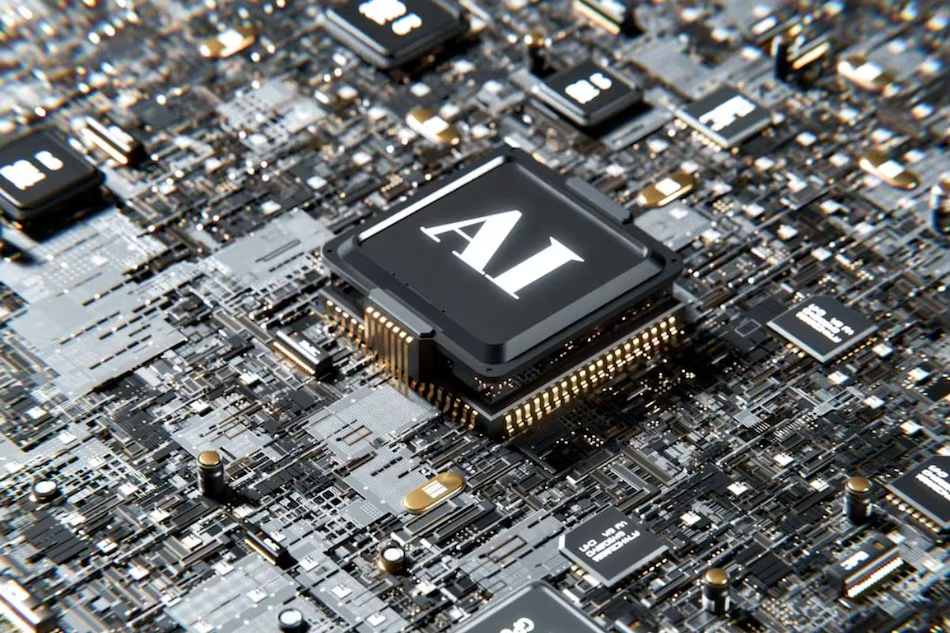
Artificial Intelligence (AI) has been a highly debated technology since its emergence. While 2023 questioned whether AI was just a buzzword and 2024 raised concerns about its responsible development, the industry gradually established its real-world value. However, in 2025, AI has faced its strongest criticism yet, with many questioning whether it has become a market bubble. A bubble, in economic terms, refers to a phase where massive investments inflate valuations far beyond actual revenue or utility, eventually leading to a sharp correction when investor confidence fades.
Critics argue that AI shows classic bubble-like signs due to unprecedented spending on infrastructure, soaring valuations, and aggressive funding of startups. Major players have committed enormous capital to AI compute and data centres, often far exceeding current revenues. High-profile investments and partnerships have intensified concerns that valuations are being driven more by investor enthusiasm than sustainable business models. As seen in past bubbles, if funding slows and companies fail to generate returns, widespread shutdowns and financial losses could follow.
However, many experts believe the situation is more nuanced. While there may be a valuation bubble, the underlying AI technology is considered transformative and here to stay. Even industry leaders acknowledge that some startups may fail and valuations may correct, but the infrastructure and core technology will remain valuable. For investors, founders, and professionals, caution and long-term vision are essential. In conclusion, AI is unlikely to disappear, but a market correction may determine which companies survive and who ultimately bears the impact.

















Comments (0)
No comments yet
Be the first to comment!