





Movies


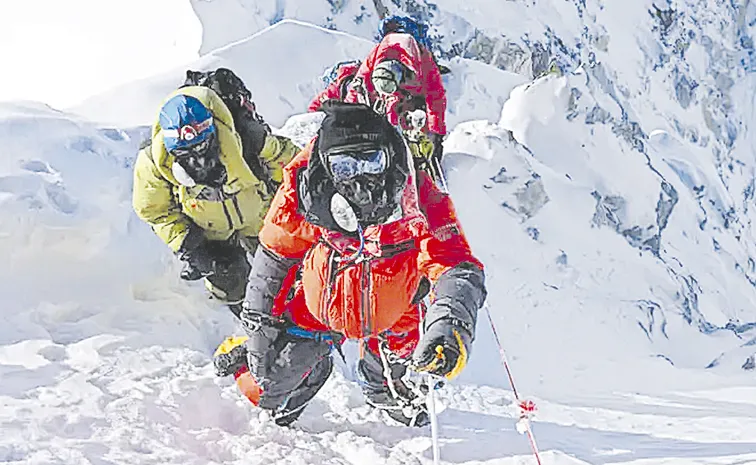
Mount Everest, the world’s highest peak, is facing growing environmental pressure as increasing numbers of climbers, tourists and support staff converge on the mountain. A study conducted by the Springer Nature Group, based on observations of weather and environmental conditions at Everest Base Camp between 2023 and 2026, has warned that around 70% of the glacier ice near the base camp could be lost by 2100 if the current trend continues. During the climbing season, which lasts around 50 days, the base camp reportedly resembles a crowded tourist hub, with nearly 1,600 tents set up to accommodate climbers and support teams.
The study also highlighted the environmental impact of fuel consumption and waste at the base camp. An average of 824 portable cooking-gas cylinders, 18,935 litres of kerosene and 5,130 litres of gasoline are reportedly used every year for cooking, heating and lighting. The resulting thermal energy is estimated to contribute to the melting of around 2,492 tonnes of ice in a single climbing season. Human waste is another concern, with climbers and support staff estimated to produce nearly 6,000 litres of urine every day, much of which reaches the Khumbu Glacier. The increasing number of yaks and other animals used to transport supplies is also adding to the problem. The heat generated from their urine is estimated to contribute to the melting of another 154 tonnes of ice during a single season.














Comments (0)
No comments yet
Be the first to comment!