





Shows


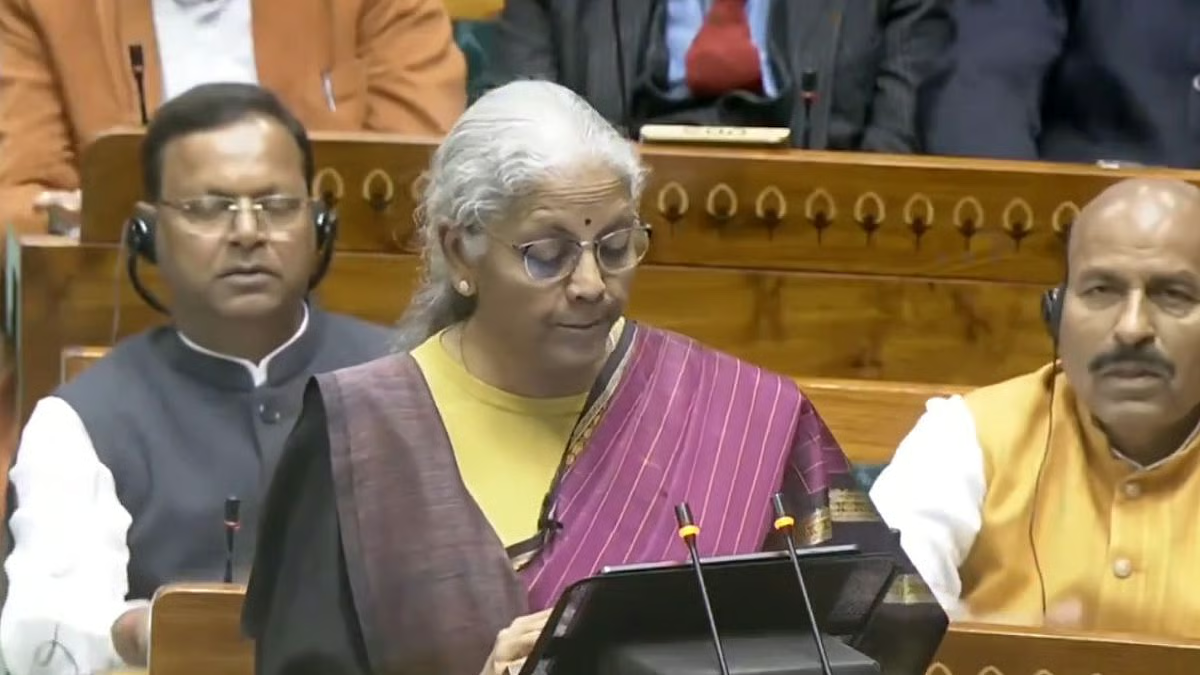
Union Finance Minister Nirmala Sitharaman’s budget for the 2026–27 fiscal year has been designed to boost economic growth while strengthening domestic manufacturing, experts say. The budget places special emphasis on supporting sectors facing pressures from tariffs imposed by U.S. President Donald Trump, ensuring they remain competitive in the global market. With the aim of accelerating manufacturing and achieving the “Viksit Bharat” vision by 2047, the government has identified seven strategic priority sectors. These include rare earth magnets, semiconductor chips, textiles, biopharma, electronic components, chemicals and capital goods.
Among these, rare earth magnets and semiconductor chips are already facing challenges due to Chinese restrictions. Textile exports have also been significantly impacted by U.S. tariffs. By strengthening these seven sectors, the Modi government aims to achieve domestic self-reliance and reduce dependency on imports. To further bolster the biopharma sector, the government has allocated ₹10,000 crore in a dedicated fund, taking into account future demand and export opportunities. In addition, measures have been announced to protect small and retail investors from losses caused by F&O trading in the stock market.
To promote domestic container manufacturing, the budget introduces a special scheme with an allocation of ₹10,000 crore over the next five years. The program aims to develop a world-class container manufacturing ecosystem in India, making the country globally competitive in this sector. The budget also emphasizes environmentally friendly logistics, proposing schemes to enhance Construction and Infrastructure Equipment (CIE) production. This initiative is expected to facilitate the domestic manufacture of advanced, high-quality CIE, reducing reliance on imports and boosting indigenous capabilities.












Comments (0)
No comments yet
Be the first to comment!