





General


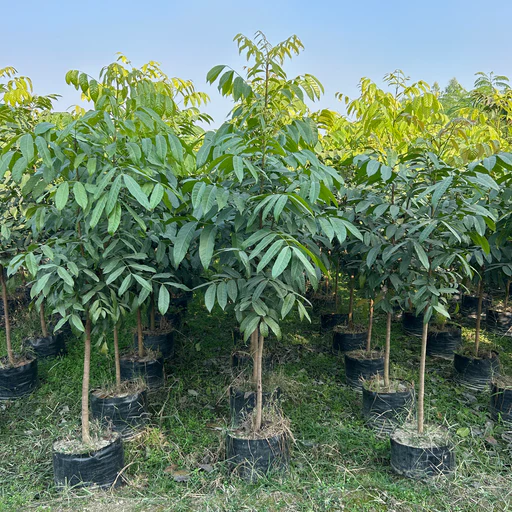
To enhance farmers’ income, the government is encouraging alternatives to traditional farming, including commercial crops and tree-based agriculture. Among these, mahogany cultivation is emerging as a highly profitable long-term investment for farmers.
Mahogany trees require relatively low maintenance and can be planted efficiently, with around 120 trees per acre. Agricultural experts state that farmers can start earning significant returns within 12 to 15 years. The wood is highly durable, resistant to moisture, and does not deteriorate easily, making it valuable in both domestic and international markets.
Mahogany is known for its medicinal properties. The leaves can be used as organic manure and are believed to be effective against conditions such as diabetes, high blood pressure, asthma, and certain cancers. The leaves also naturally repel mosquitoes and insects. Oil extracted from the seeds is widely used in making mosquito repellents, pesticides, soaps, paints, varnishes, and medicinal products.
The tree produces seeds once every five years, yielding up to five kilograms per tree. These seeds are highly valuable and can be sold at around ₹1,000 per kilogram. Seeds and flowers are also used in the preparation of energy-boosting medicines.
Mahogany produces premium reddish-brown hardwood known for its strength and resistance to pests. It is widely used in furniture, musical instruments, boats, and luxury products. In India, mahogany is considered a profitable commercial tree crop, with wholesale prices ranging between ₹2,000 and ₹2,200 per cubic foot.
Mahogany can be grown along farm boundaries or as a full plantation. Winter is considered the best planting season, as the trees require moderate temperatures for healthy growth. They thrive at around 15°C in winter and up to 35°C in summer. Although full maturity takes about 25 years, the trees are ready for harvesting after 12 years, allowing farmers to generate income relatively early.

















Comments (0)
No comments yet
Be the first to comment!