
General


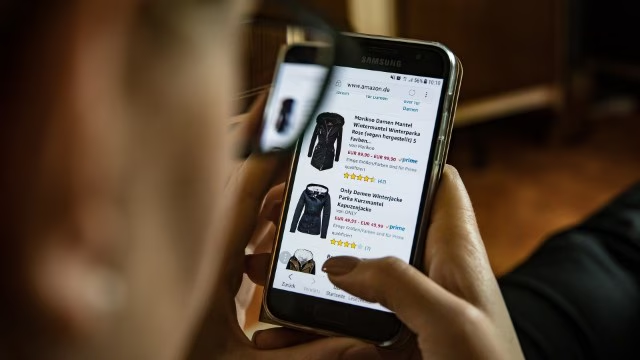
Artificial intelligence played a major role in boosting this year’s Black Friday online shopping. U.S. consumers increasingly relied on AI tools for price comparison and deal discovery, leading to a record 11.8 billion dollars in online spending — a 9.1% increase from 2024. Globally, AI and automated agents influenced 14.2 billion dollars in online sales, with 3 billion coming from the United States.
This growth came despite economic pressures such as tighter budgets, weakening consumer confidence, and rising prices. According to Mastercard SpendingPulse, e-commerce sales grew 10.4%, while in-store sales rose only 1.7%.
AI-driven traffic to U.S. retail sites surged by 805%, supported by new tools like Walmart’s Sparky and Amazon’s Rufus. Analysts noted that AI made gift discovery easier and faster for shoppers. Popular Black Friday products included LEGO sets, Pokemon cards, Nintendo Switch, PlayStation 5, Apple AirPods and KitchenAid mixers.
Salesforce reported that Americans spent 18 billion dollars online on Black Friday, with luxury apparel and accessories seeing strong demand. However, higher prices led consumers to purchase fewer items than last year. Tariffs and inflation kept discount levels mostly flat, reducing the perceived value of deals.
Average selling prices rose 7%, while order volumes fell by 1%. Salesforce analysts said tariffs and a more active high-income consumer segment were key reasons for rising prices.
The strong spending momentum sets the stage for a massive Cyber Monday, projected to reach 14.2 billion dollars in online sales. Adobe expects the steepest discounts — up to 30% — on electronics, computers and apparel.
In physical stores, however, shopping remained subdued as many consumers avoided overspending due to inflation, economic uncertainty and a soft labor market.


















Comments (0)
No comments yet
Be the first to comment!