

Shows


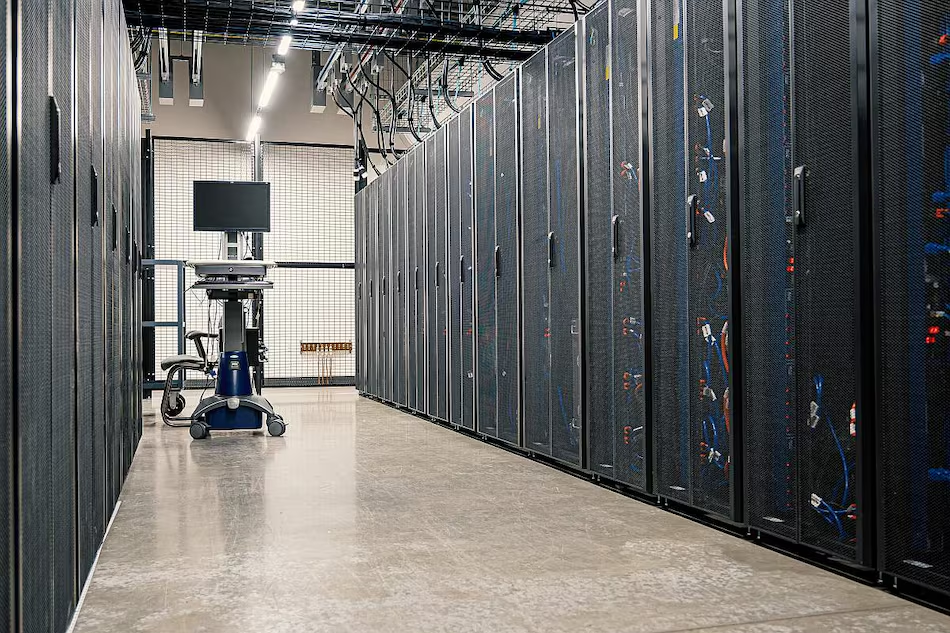
A 2025 peer-reviewed study warns that artificial intelligence may now have a larger environmental footprint than widely assumed. Researchers estimate that the water consumed by AI-powered data centres could exceed the total global consumption of bottled water, while the carbon emissions linked to AI operations may be comparable to New York City’s annual footprint. These findings highlight the growing environmental strain caused by the global expansion of AI.
The study, led by Dutch researcher Alex de Vries-Gao, examined the carbon and water impact of data centres running AI workloads. Since companies do not clearly separate AI and non-AI energy usage in their disclosures, the research relied on environmental reports from firms such as Google, Meta, and Amazon to estimate AI-related consumption. Based on multiple models, researchers estimate that AI systems could emit between 32.6 and 79.7 million tons of CO₂ in 2025. Water usage may range from 312.5 to 764.6 billion litres — exceeding the total bottled water consumed globally in a year. This positions AI not only as an energy concern but also as a water-security issue.
The study also found that the primary environmental burden comes from inference — the daily processing of user queries — rather than from model training. Despite improvements in data-centre efficiency, the rapid rise in AI usage is outpacing these gains, leading to overall higher environmental impact. Researchers recommend that AI infrastructure should be regulated like major industrial sectors, and they urge companies to improve transparency in environmental reporting so policymakers can respond with accurate, up-to-date data.

















Comments (0)
No comments yet
Be the first to comment!