
Movies


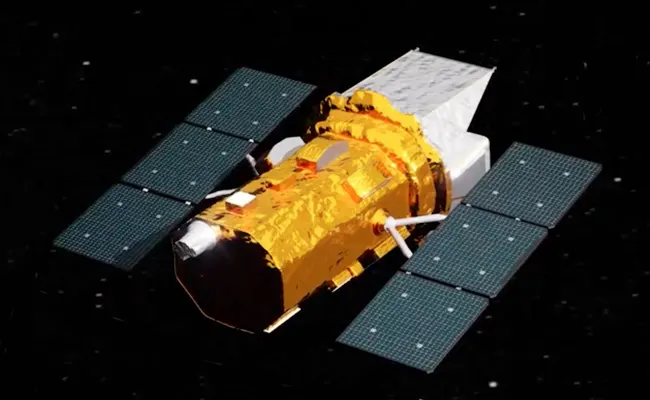
NASA’s Swift Observatory, a space telescope that has been operating for nearly 22 years, is expected to re-enter Earth’s atmosphere and eventually fall back to the planet. Attempts to rescue the ageing observatory have failed, leaving it gradually losing altitude. The US Space Force is monitoring its descent and estimates that it could come down soon. Scientists believe that most of the spacecraft, which weighs around 1.5 tonnes, will burn up during atmospheric re-entry. However, some components and fragments of its mirrors could survive the descent and reach the Earth’s surface, said Brad Cenko, the mission’s principal investigator.
Launched on November 20, 2004, the Swift Observatory was designed to study some of the universe’s most powerful explosions, including gamma-ray bursts and supernovae. NASA had assigned the task of rescuing the telescope to Catalyst Space. However, the company’s attempt in July to deploy a three-armed robotic spacecraft called Link failed, and the robot itself fell back to Earth in September. As the situation deteriorated, the systems aboard Swift were shut down in October. During its mission, the observatory studied more than 2,000 gamma-ray bursts, around 1,400 supernovae, as well as numerous comets, asteroids and black holes. Its ability to rapidly turn towards cosmic explosions and observe them earned it the name ‘Swift’.














Comments (0)
No comments yet
Be the first to comment!