

General


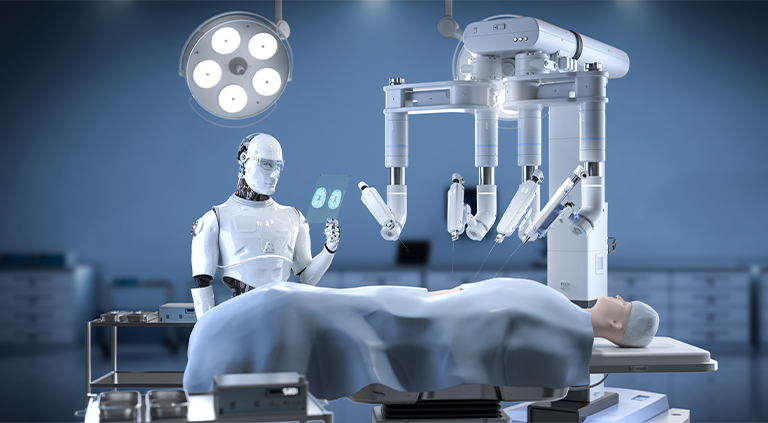
Advancements in virtual reality, augmented reality, and artificial intelligence are transforming interventional radiology by enhancing precision, training, and patient care. Virtual reality creates immersive 3D environments that help in physician training, rehabilitation, and stress reduction, while augmented reality overlays digital information onto the real world to assist in procedures. These technologies allow better visualisation of anatomy and improve accuracy during medical interventions.
Robotics is also playing a key role by acting as a high precision tool under human control. These systems assist in procedures such as biopsies and ablations by enabling accurate needle placement and reducing radiation exposure. While robotic systems improve efficiency and safety, they still require continuous human supervision, especially in complex vascular procedures where full automation is not yet possible.
Artificial intelligence is further enhancing interventional radiology by supporting tasks such as lesion detection, procedural planning, and real-time tracking. It helps improve consistency, reduce errors, and enhance outcomes in complex procedures. Despite these advancements, experts emphasise that technology cannot replace human expertise, and successful outcomes depend on effective integration of these tools with skilled medical professionals.












Comments (0)
No comments yet
Be the first to comment!