
General


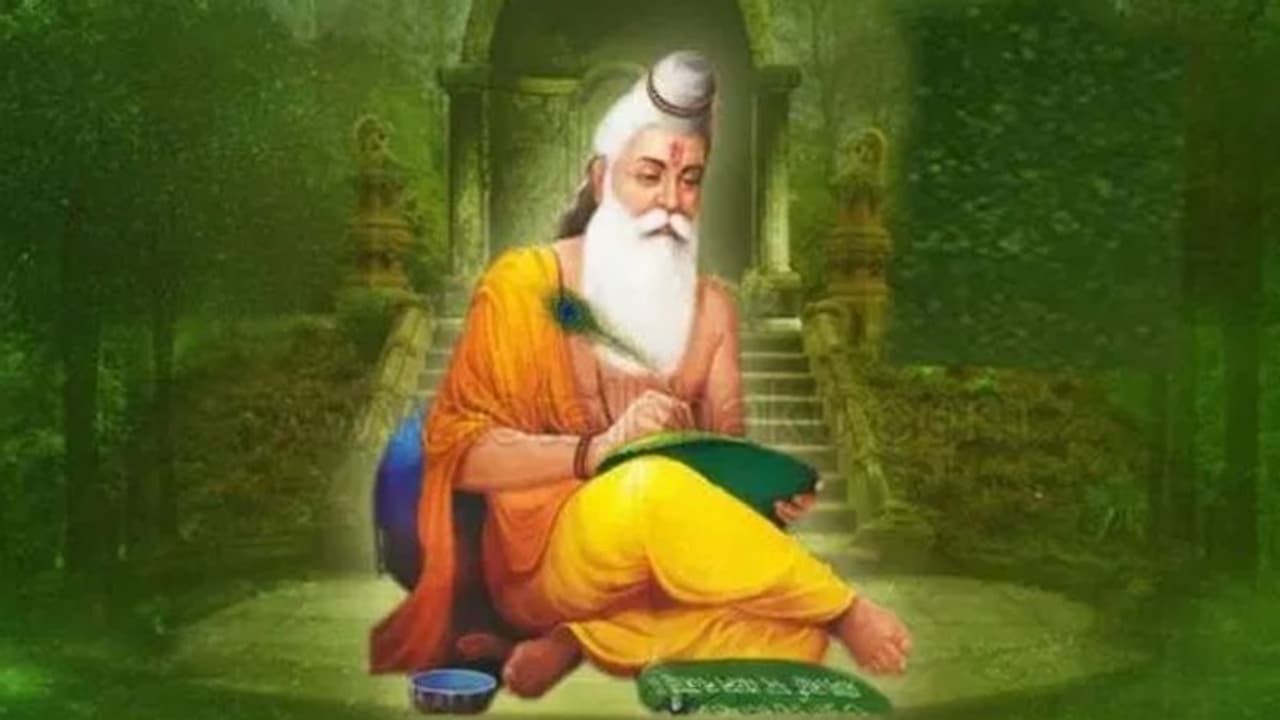
Maharshi Valmiki, revered as the Adi Kavi or the first poet, holds a significant place in Indian spiritual and literary traditions as the author of the Sanskrit epic Ramayana. Valmiki Jayanti is observed in his honour, celebrating his life, wisdom and remarkable transformation. According to traditional accounts, Valmiki was originally known as Ratnakara, a hunter and robber who survived by looting travellers in the forest. One day, he attempted to rob Narada Maharshi, who challenged him with a thought-provoking question: would his wife and children share the sins he committed to support them? Troubled by the question, Ratnakara returned home and asked his family members. They explained that providing for the family was his responsibility, but they would not share the consequences of his actions. Realising the implications of his deeds, Ratnakara returned to Narada and sought guidance on how to overcome his past mistakes and follow a righteous path.
According to the legend, Narada Maharshi taught Ratnakara the practice of chanting the name of Lord Rama and advised him to undertake penance. Unable to pronounce the word 'Rama' initially, Ratnakara is said to have begun chanting 'Mara', which gradually transformed into the sacred name 'Rama' through continuous repetition. As he meditated for an extended period, an anthill formed around him. The name Valmiki is traditionally associated with his emergence from the anthill, known as 'Valmika' in Sanskrit. Inspired by Narada, Valmiki later composed the Ramayana in Sanskrit and became celebrated as the Adi Kavi. Valmiki Jayanti is an occasion to reflect on his teachings, recite the Ramayana and chant the name of Lord Rama. His life conveys a timeless message: self-realisation, perseverance and the willingness to change can lead a person from wrongdoing towards wisdom and spiritual enlightenment.









Comments (0)
No comments yet
Be the first to comment!