





Sports


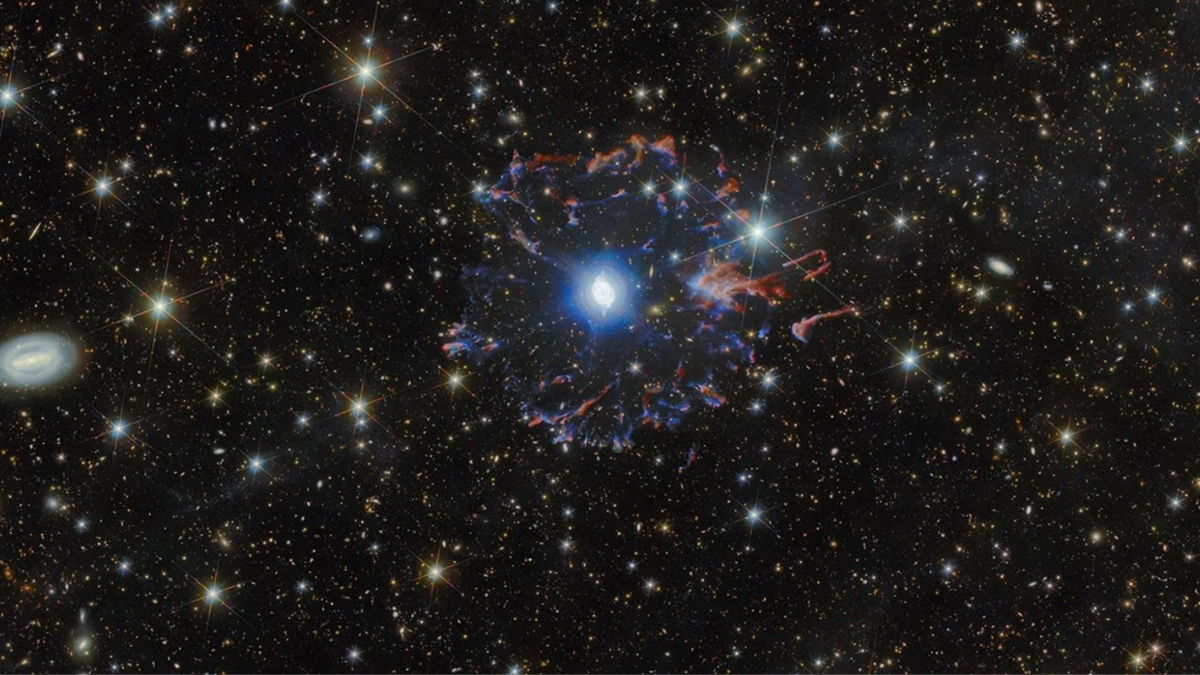
In a remarkable scientific collaboration, NASA’s Hubble Space Telescope and the European Space Agency’s Euclid space telescope have captured a stunning composite image of the Cat’s Eye Nebula. This planetary nebula, located in the Draco constellation about 4,300 to 4,400 light-years away from Earth, is formed from the outer layers of a dying star. The new image reveals colourful gas shells, arcs and filaments surrounding the nebula, along with an outer ring of material that was expelled during earlier stages of the star’s life.
While Euclid’s wide-field cameras captured the broader structure and surrounding space, Hubble’s high-resolution instruments focused on the nebula’s core. The detailed view shows intricate gas layers, knots and fast-moving jets near the central star, providing scientists with valuable clues about the star’s final phases. By combining observations from both telescopes, researchers are able to study the history of the star’s mass loss and better understand how planetary nebulae evolve in the universe.













Comments (0)
No comments yet
Be the first to comment!