

Movies


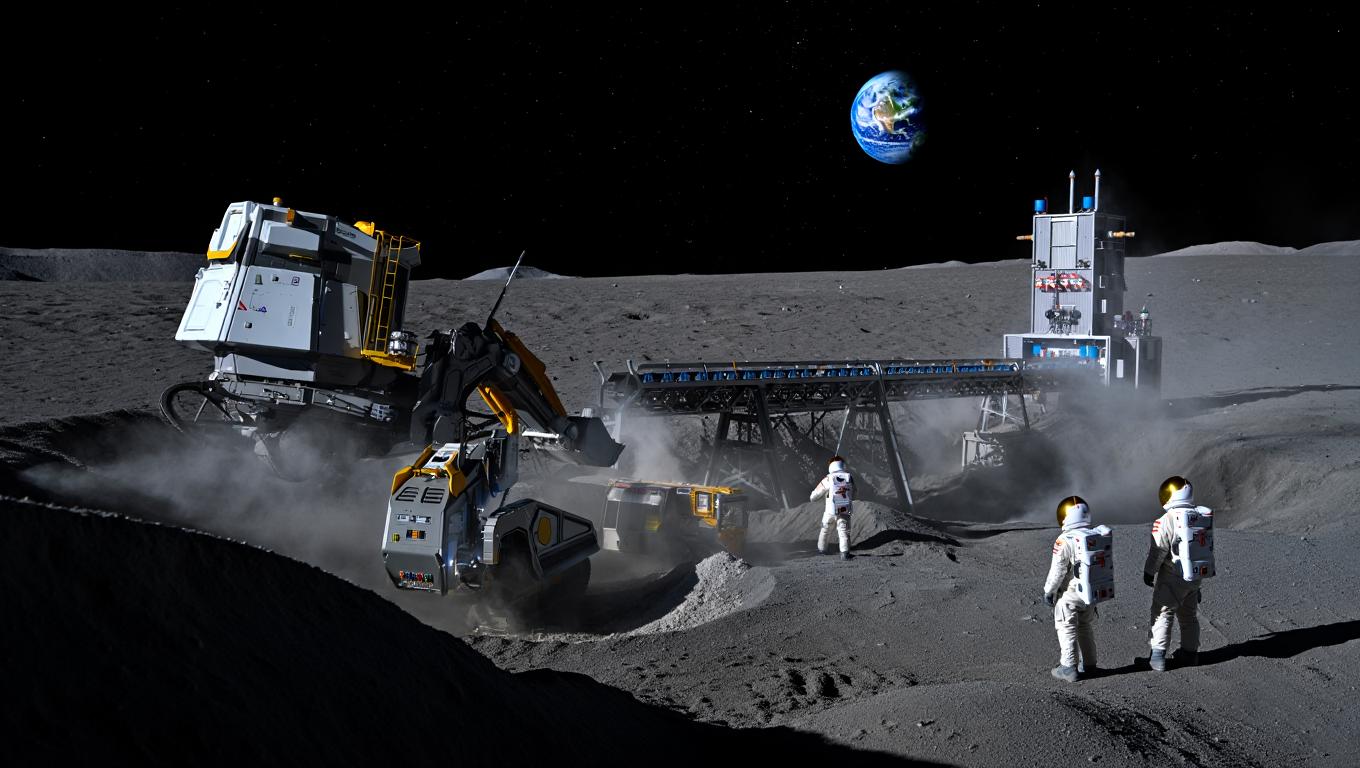
As Earth's natural resources become increasingly strained, global attention is shifting toward the Moon as the next frontier for resource extraction. Governments and private companies are accelerating lunar exploration missions with a particular focus on Helium-3, a rare isotope believed to exist in significant quantities beneath the Moon’s surface. The United States, through its Artemis program, along with China, Japan, India, and several private firms, is exploring ways to establish a long-term presence on the Moon and utilize its valuable resources.
Helium-3 is considered a potential game-changer for future technologies, including nuclear fusion energy, quantum computing, and advanced medical imaging. Scientists estimate that the Moon may contain more than one million tonnes of the isotope, accumulated over billions of years through solar winds. However, extracting it remains a major challenge, requiring the processing of vast amounts of lunar soil and overcoming harsh environmental conditions. Despite these obstacles, growing demand and technological advancements in robotics, artificial intelligence, and space transportation are driving a global race to unlock the Moon’s economic potential.

















Comments (0)
No comments yet
Be the first to comment!