





Politics


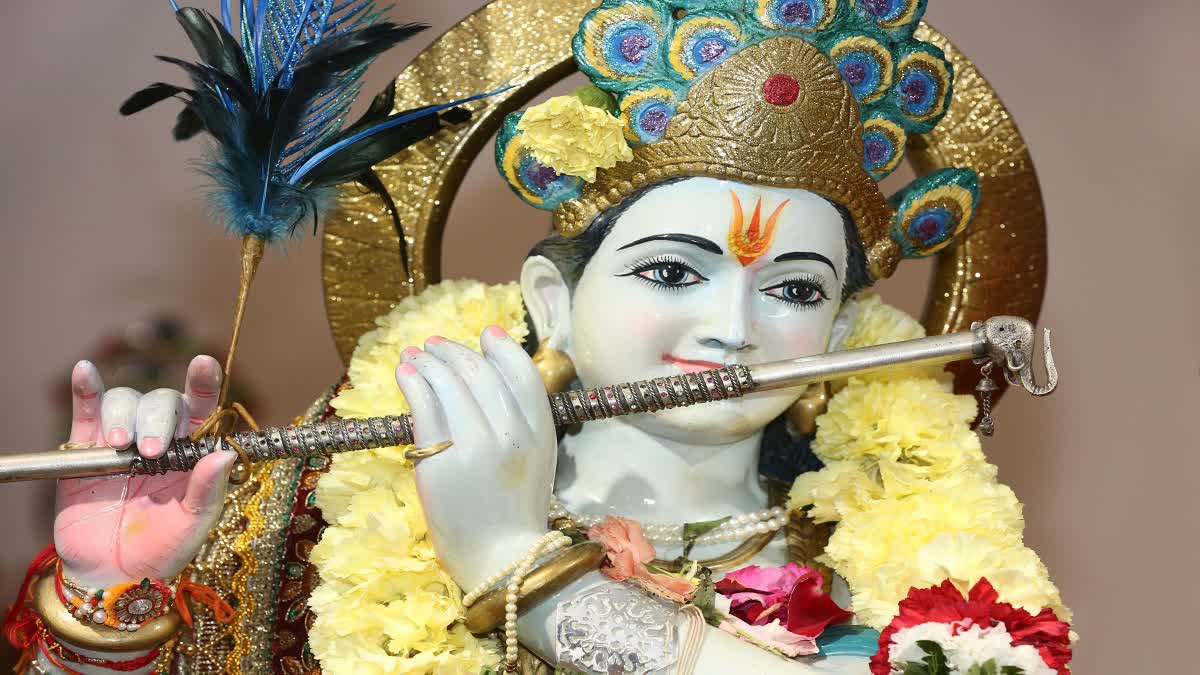
Lord Krishna, regarded as the eighth incarnation of Lord Vishnu, is traditionally believed to have been born to Devaki on Shravana Bahula Ashtami and raised with affection by Yashoda in Gokulam. His birth anniversary is celebrated as Krishna Ashtami, Janmashtami or Gokulashtami. In 2026, the festival falls on September 4, Friday, according to the Telugu Panchangam mentioned in the source. Devotees may observe fasting and night vigil depending on their family and regional traditions, though these practices are not compulsory.
On Krishna Ashtami, devotees traditionally clean and decorate their homes and puja spaces, adorn a Bal Krishna idol and draw tiny Krishna footprints from the entrance into the house using rice flour. A lamp with five wicks is lit, and the mantra “Om Sri Krishna Parabrahmane Namah” is traditionally chanted 108 times. Butter, beaten rice, milk, chalividi, sunnundalu and other favourite offerings are presented to Krishna. Panchakhajjayam, prepared with ingredients such as dry coconut, edible camphor, cardamom and sugar, is also traditionally offered. In North India, devotees prepare 56 varieties of offerings, while tulasi leaves are considered an important part of Krishna worship.
Major temples in Dwarka, Mathura, Vrindavan, Udupi, Guruvayur and other parts of India celebrate the festival with elaborate decorations, devotional programmes and cultural performances depicting Krishna’s childhood and divine stories. In several places, the traditional Uri or Dahi Handi celebrations take place in the evening, with children dressed as Krishna and Gopikas adding to the festive atmosphere. Devotees also traditionally recite the Dashama Skandha of the Bhagavatam and perform Ashtottara or Krishna Sahasranama puja.
Note: The above information is based on traditional religious practices, Panchangam references and beliefs associated with Krishna Ashtami. Some of these beliefs and religious claims may not have modern scientific evidence. Readers may follow the practices according to their personal faith, family traditions and guidance from qualified religious scholars.







Comments (0)
No comments yet
Be the first to comment!