Politics

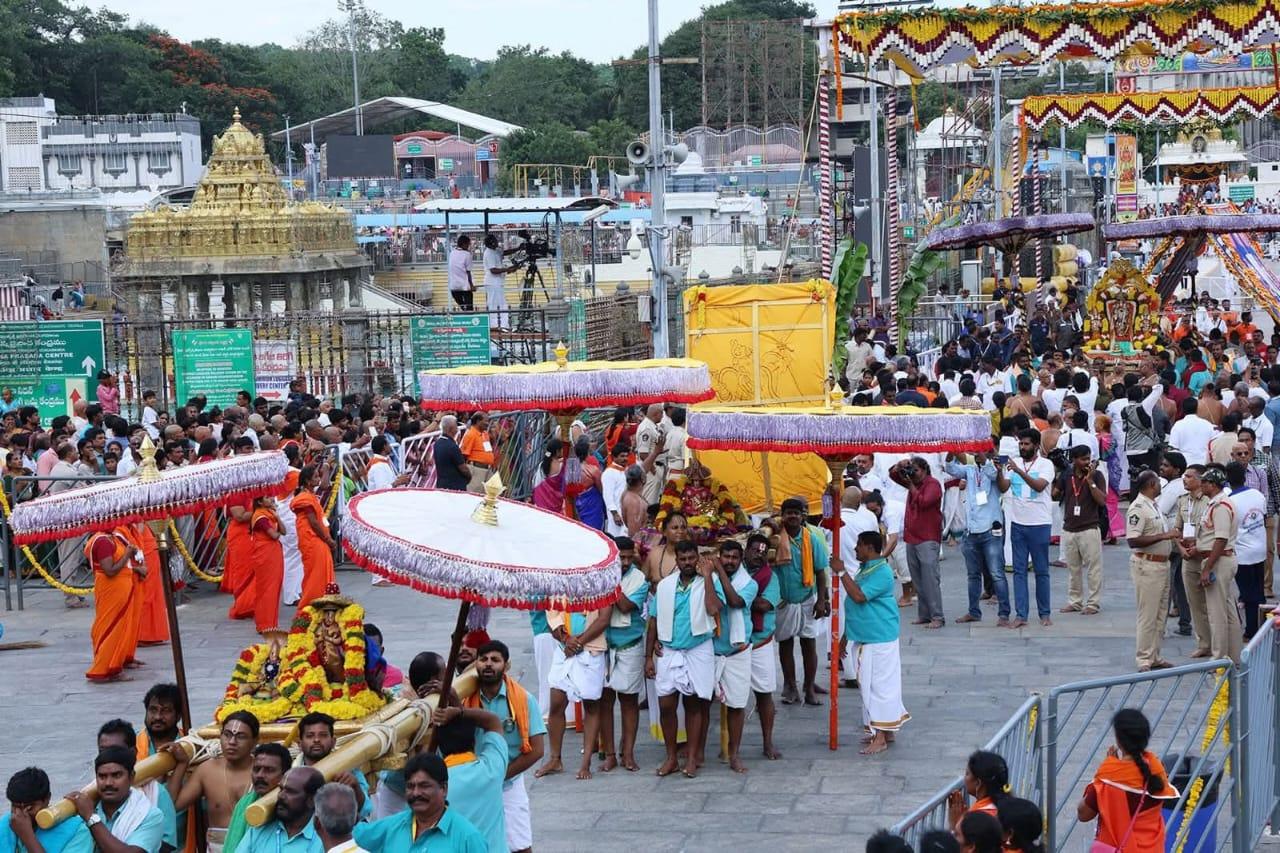
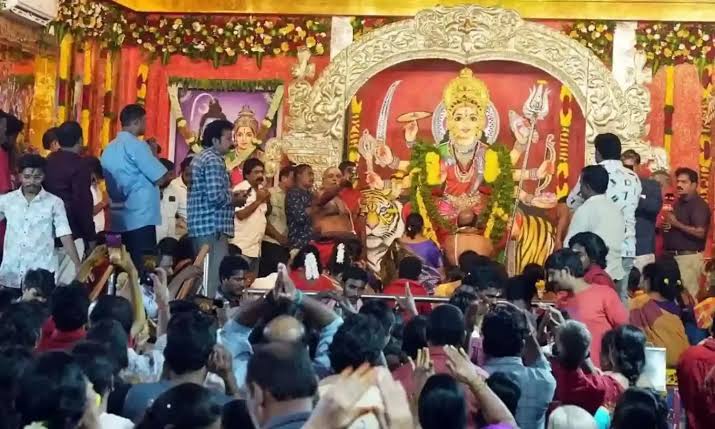
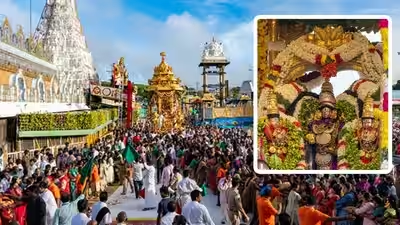
Tirumala Brahmotsavams, known today for their nine days of grand religious celebrations, have evolved over several centuries. From the ceremonial flag hoisting to Chakrasnanam, the daily vehicle processions and the chanting of Govinda by lakhs of devotees, the festival’s present form is the result of a long historical evolution. Temple inscriptions, along with historical records published by TTD, provide important evidence of this journey. According to tradition, Brahma is believed to have first conducted the festival to mark Lord Srinivasa’s manifestation on Venkatadri, giving rise to the name Brahmotsavam. Inscriptions associated with Pallava queen Samavai Perundevi, who donated a silver Bhoga Srinivasa idol, ornaments and lands for temple activities, indicate that Brahmotsavams were being conducted by the 10th century.
The festival tradition expanded significantly during the Chola, Yadavaraya and Vijayanagara periods. Records indicate that Sri Krishnadevaraya introduced a new Brahmotsavam in 1513 during his birth month, while inscriptions from the reign of Achyutaraya mention another festival in 1533. In 1539, Tallapaka Pedda Tirumalayyangar was associated with the introduction of the Ani Brahmotsavam, further increasing the number of annual celebrations. Inscriptions also provide evidence of Malayappa Swamy being used as the processional deity. By the later Vijayanagara period, records mention as many as ten Brahmotsavams in a year. Earlier, Chola and Yadavaraya patronage had contributed to the addition of several festivals, taking the number to five by the time the Vijayanagara Empire emerged.
Comments (0)
No comments yet
Be the first to comment!