General


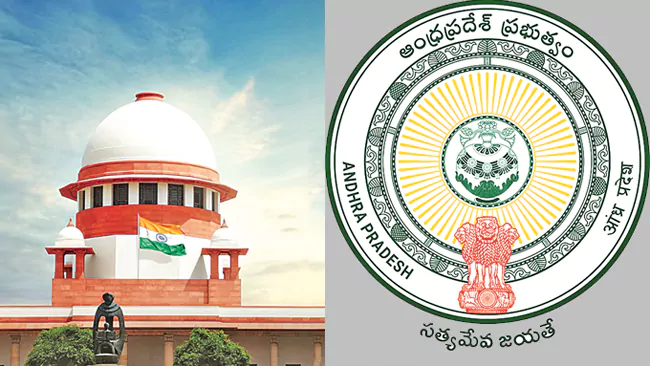
The Andhra Pradesh government has approached the Supreme Court challenging the High Court’s decision to strike down Government Orders 105 and 1065 providing 34 per cent reservation for Backward Classes in rural local bodies and 33.33 per cent in urban local bodies. In its petition, the state argued that the 50 per cent reservation ceiling is not an absolute rule applicable in every situation and that the Supreme Court has previously held that reservations can exceed the ceiling when supported by adequate, contemporary and empirical data. The government also pointed out that while total reservations in rural local bodies would reach 61.08 per cent, the figure for urban local bodies would remain at 49.24 per cent.
The state said it conducted a comprehensive integrated family survey from December 2025, covering demographic, social, economic, educational, employment, housing and asset-related details. According to the government, the survey found that BCs account for around 50.42 per cent of the state’s population, including 48.84 per cent in rural areas and 54.35 per cent in urban areas. The government contended that the data was subsequently placed before local bodies for social verification and that the High Court should have examined the methodology and contemporary data instead of rejecting the reservation solely on the basis of the 50 per cent ceiling. The state cited earlier Supreme Court rulings, including those in the K. Krishnamurthy and Vikas Kishanrao Gawali cases, in support of its argument.






Comments (0)
No comments yet
Be the first to comment!