

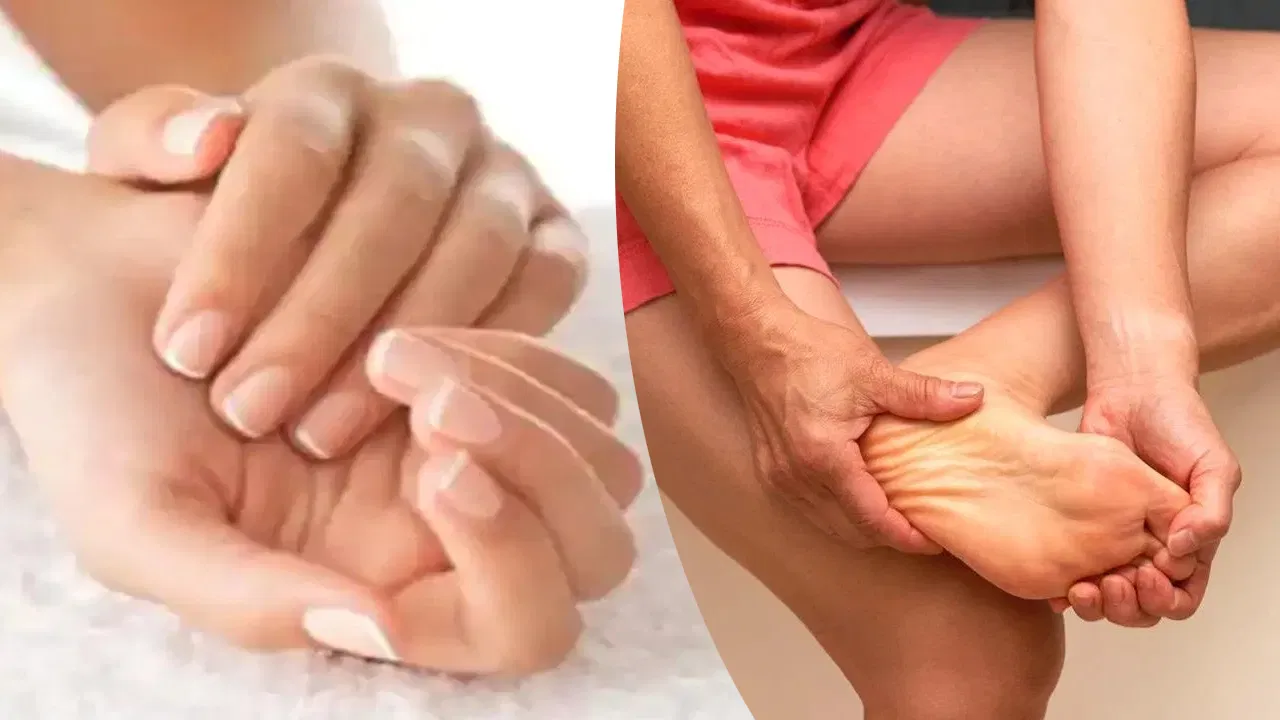
Many people often experience tingling or numbness in their hands and feet and tend to ignore it, assuming it is a minor issue. However, medical experts warn that such symptoms should not be neglected, as they may arise from various underlying causes. Sitting in the same position for prolonged periods, standing on one leg, keeping the hands in a fixed posture or sleeping in an improper position can increase pressure on the nerves and lead to temporary numbness. Remaining in one position for too long may also affect blood circulation, causing the hands and legs to feel numb. In addition, extended use of mobile phones or laptops can strain the nerves. Health conditions such as Vitamin B12 deficiency, diabetes, thyroid disorders and poor blood circulation are also known to contribute to tingling sensations.
Compression of nerves in the neck or back can also result in tingling and numbness in the hands and legs. In some cases, stress and anxiety may affect nerve function as well. According to Dr. Ajay Kumar from Delhi MCD, if numbness occurs briefly due to pressure and subsides after changing posture, it is generally considered normal. However, if tingling happens repeatedly without a clear reason, persists for a long time, or is accompanied by pain, burning sensations or weakness, it may indicate an underlying nerve disorder. Symptoms such as instability while walking, difficulty standing upright, sudden numbness in one part of the body or trouble speaking or moving require immediate medical attention.
Persistent or worsening numbness can sometimes be linked to serious conditions. Nerve damage caused by diabetes, severe Vitamin B12 deficiency or spinal nerve compression may have significant health implications. Sudden numbness accompanied by weakness or drooping of one side of the face may indicate a stroke and requires urgent evaluation and treatment. If tingling occurs occasionally and resolves quickly, adjusting posture, performing gentle stretches, maintaining a balanced diet, preventing vitamin deficiencies and exercising regularly can help. However, if the problem continues or becomes severe, it is essential to consult a healthcare professional and undergo appropriate medical tests.
Note: The information provided here is for awareness purposes only. We do not assume responsibility for its application. If you have any health concerns, please consult a qualified physician or nutritionist and follow their professional advice.




















Comments (0)
No comments yet
Be the first to comment!