
Movies


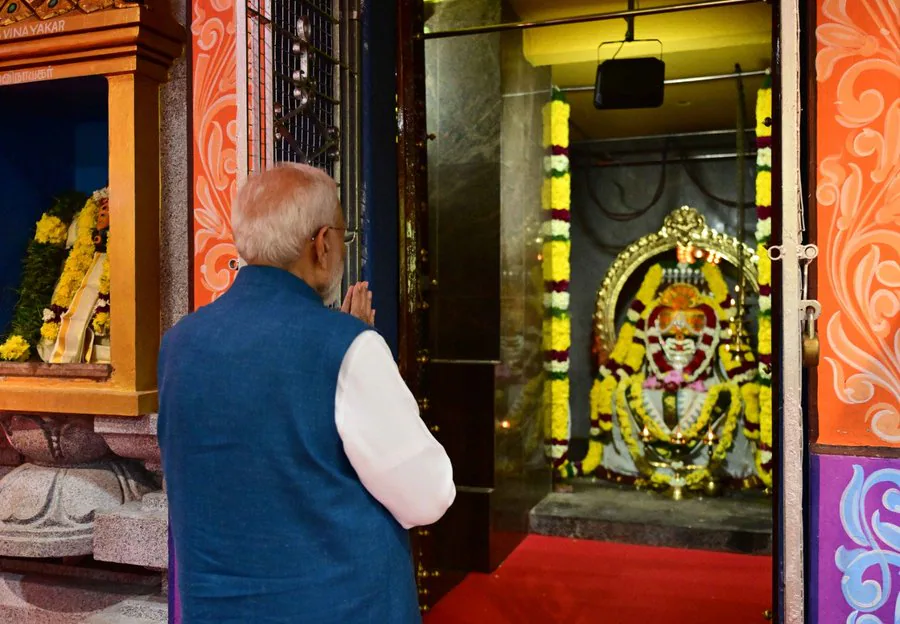
Lord Shiva, revered as the supreme deity of the universe, is worshipped across India in several sacred forms, including the twelve Jyotirlingas. The five elemental Shiva temples, known as the Pancha Bhoota Sthalams, represent the five fundamental elements of nature: earth, water, fire, air and space. These include the Prithvi Lingam at Kanchipuram, the Jala Lingam at Jambukeswaram, the Tejo Lingam at Arunachalam, the Vayu Lingam at Srikalahasti and the Akasha Lingam at Chidambaram. Among the many renowned Shiva temples, Jalakanteswarar temples also hold religious and historical significance. Following Prime Minister Narendra Modi’s visit to the Sri Jalakanteswarar Temple near Chennai, interest in the temple and its history has grown. While the name Neelakantha is associated with Lord Shiva holding the poison that emerged during the churning of the ocean to protect the universe, Jalakanteswarar represents a form associated with the element of water.
The famous Jalakanteswarar Temple located inside the Vellore Fort in Tamil Nadu is dedicated to Lord Shiva and Goddess Akhilandeshwari. According to local belief, the deity came to be known as Jalakanteswarar because the Shiva Lingam was found in water or was associated with a location surrounded by water. However, historical accounts offer other possible explanations for the name. One account suggests that the deity was originally called Jwalakanteswarar and that the name gradually changed to Jalakanteswarar over time. Another interpretation links the name to Jwarahareshwarar, a form of Lord Shiva mentioned in Shaiva traditions and associated with relieving both physical fever and the mental distress caused by life’s troubles. According to this interpretation, the name Jalakanteswarar may have evolved from Jwarahareshwarar. These explanations reflect the different traditions and historical interpretations associated with the deity.
Another temple dedicated to Sri Jalakanteswarar is located within the Indian Institute of Technology Madras (IIT Madras) campus in Chennai, near Delhi Avenue. According to the IIT Madras Heritage Centre, a small place of worship containing a Shiva Lingam once existed beneath a mandapam near a pond, with a thatched roof covering the shrine. Local residents and people from nearby villages worshipped the deity even before the establishment of the institute. Later, following the guidance of Kanchi Paramacharya Sri Chandrasekharendra Saraswati Swamigal, a temple was constructed to facilitate worship according to Agama traditions. Construction began in 1962 and was completed in 1965. The first Kumbhabhishekam, a consecration ceremony, was performed on June 18, 1965. The main deity is Sri Jalakanteswarar, worshipped alongside Goddess Katyayani, with Lord Ganesha, Lord Subramanya and other deities also enshrined in the temple.







Comments (0)
No comments yet
Be the first to comment!