
Movies


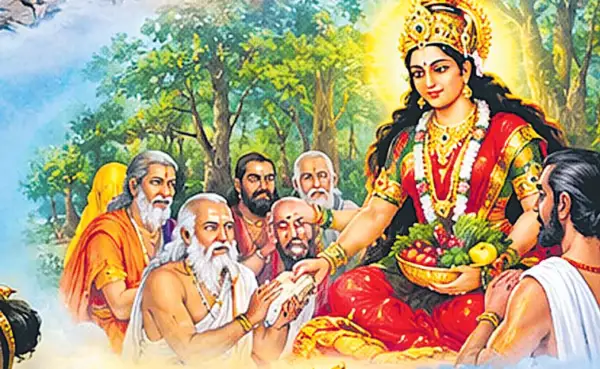
According to Hindu mythology, Durgamasura, a powerful demon born into the lineage of Hiranyaksha, sought to weaken the gods by taking control of the Vedas, which were considered the foundation of their strength. After performing severe penance, he received a boon from Lord Brahma, enabling him to take possession of the Vedas and the sacred mantras known to Brahmins. As a result, Vedic rituals and sacrificial offerings ceased, leaving the gods weakened. Durgamasura seized heaven, while the absence of rituals brought drought and famine to the human world. The gods and sages prayed to the Divine Mother for help. Pleased by their devotion, the Goddess appeared with fruits and vegetables in her hands, brought rain through her compassionate eyes, and restored water to rivers, lakes and reservoirs. She came to be praised as Shakambhari, the provider of nourishment to all living beings.
When Durgamasura learned that the gods and sages had gathered to worship the Goddess, he marched against them with his army. The Divine Mother protected her devotees and entered the battlefield. Numerous divine feminine powers emerged from her to destroy the demon's forces. In the final battle, the Goddess struck Durgamasura with a series of arrows, killing him and restoring peace to the three worlds. She then returned the Vedas to the sages, restoring the sacred knowledge that had been taken away. The account also describes a distinctive tradition at the Renuka Devi Shakti Peetha in Mahur, Maharashtra. Unlike many temples where offerings such as pulihora, sweet rice and curd rice are distributed, this shrine is known for offering 'Vidatamboolam', a preparation made with betel leaves and ingredients such as gulkand, fennel seeds, cardamom, cloves, edible lime, sesame seeds and grated coconut. According to the local legend, Renuka Devi appeared in Lord Vishnu's dream and requested this offering, establishing the custom followed at the shrine.







Comments (0)
No comments yet
Be the first to comment!