General


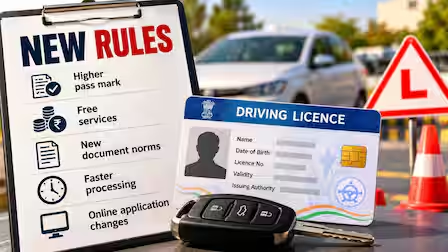
The Central Government is proposing significant changes to the rules for obtaining a learner’s driving licence in India, with the aim of improving road safety and increasing awareness of traffic regulations. Under the proposed changes, the minimum passing mark for the driving tutorial test would increase from 60% to 75%, and applicants would be required to spend at least 30 minutes completing the tutorial. The government has also proposed extending the time allowed to complete the tutorial from seven days to 15 days, giving applicants more time to understand essential driving rules. Exemptions previously available to certain applicants who had already obtained a learner’s licence or held certificates from driving schools may also be removed. If the proposals are approved, the specified tutorial and test requirements could apply to these applicants as well. The government is also considering waiving fees for selected driving licence services accessed through Aadhaar-based online verification, including changes to names and other personal details, as well as updates to addresses, mobile numbers and email IDs.
The proposed rules also include changes to the documents accepted for verifying identity, age and address. Documents such as Aadhaar cards, voter ID cards, passports, e-ration cards, PAN cards and specified government employment or pension documents may be accepted, depending on the requirement. Recent electricity and household gas bills may be used as address proof, provided they were issued within the previous three months. For age verification, the proposed list includes passports, birth certificates and marksheets or certificates issued by recognised educational institutions. The government has also proposed issuing driving licences in laminated or PVC card formats, with separate formats reportedly planned for Indian citizens and foreign nationals. Applications to update licence details would need to be approved or rejected within 15 days, with reasons recorded in cases of rejection. For address-change applications, the draft proposes that they may be treated as approved if the authorities do not make a decision within 30 days. However, these changes are still at the draft stage. The public and relevant stakeholders will be given 30 days to submit their feedback. The rules will come into effect only after the government finalises them and publishes them in the official Gazette. Until then, applicants should continue to follow the existing rules.


















Comments (0)
No comments yet
Be the first to comment!