
General


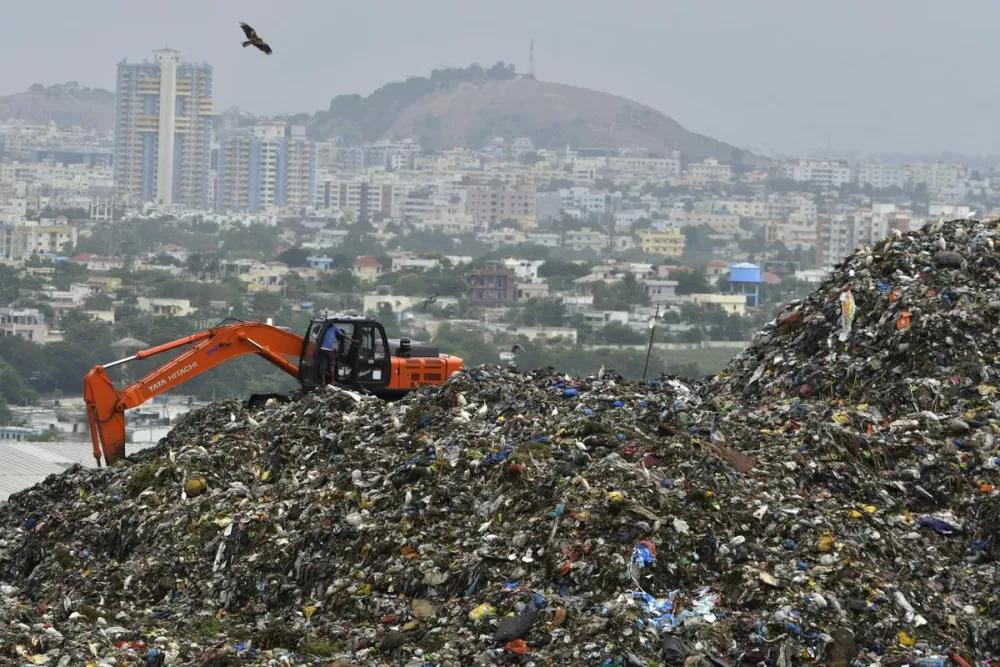
While many parts of Hyderabad enjoy relatively clean air, residents of Jawaharnagar and nearby areas continue to face the unpleasant smell of the city’s growing waste. The problem is largely attributed to Hyderabad’s dependence on a single major dumping yard, which has become a source of concern for surrounding communities. Although Special Chief Secretary of the Municipal Administration Department Jayesh Ranjan and Malkajgiri Municipal Corporation Commissioner Vinay Krishna Reddy recently visited settlements near the dumping yard, residents are still awaiting concrete measures to address the issue. No conclusive assessment of methane emissions from the site has been made public to establish the extent of the pollution.
The previous government, led by former Chief Minister K. Chandrashekar Rao, had announced plans to establish modern waste management facilities in different parts of Hyderabad, using methods designed to minimise foul odours. Land surveys were reportedly conducted in Pyaranagar and Dundigal in Sangareddy district, as well as in Khanapur and Yacharam in Rangareddy district. However, the process stalled following opposition from local residents. Instead, two waste-to-energy plants were established in Jawaharnagar and another in Dundigal. Although these facilities process around 2,500 tonnes of waste, the burden on the Jawaharnagar dumping yard remains substantial. The city’s daily waste generation has reportedly increased from 7,500 tonnes to 10,500 tonnes. Meanwhile, a proposed advanced waste recycling facility at Siddapur in Rangareddy district has yet to make significant progress.
According to figures cited in the supplied report, the Jawaharnagar dumping yard ranks fourth among the world’s largest methane-emitting sites, releasing an estimated 5.9 tonnes of methane into the atmosphere every hour. The report compares these emissions to the pollution produced by 1.2 million cars. Methane is a potent greenhouse gas, with a much stronger warming effect than carbon dioxide over a 20-year period. The figures highlight the need for scientific emissions monitoring, improved waste processing and the development of alternative waste management facilities to reduce the environmental and public health burden on nearby communities.











Comments (0)
No comments yet
Be the first to comment!