





Sports


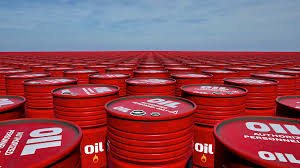
India continued to be one of Russia’s biggest oil customers in October, spending around €2.5 billion on crude purchases just before new US sanctions came into effect on major Russian producers Rosneft and Lukoil. This spending level is the same as in September, according to data from the Centre for Research on Energy and Clean Air (CREA).
Despite tighter restrictions from the West, India remained the second-largest buyer of Russian fossil fuels, behind only China. The US sanctions announced on October 22 led major refiners like Reliance Industries, HPCL-Mittal Energy, and Mangalore Refinery to temporarily pause their imports.
Russia supplied about 60 million barrels of crude in October, with Rosneft and Lukoil alone contributing 45 million barrels. CREA’s monthly report shows that crude oil made up 81% of India’s Russian energy imports €2.5 billion, followed by coal at 11% €351 million and refined oil products at 7% €222 million.
India, which traditionally depended on Middle Eastern suppliers, sharply increased its Russian oil intake after the 2022 Ukraine invasion. Discounts and reduced European demand made Russian crude more attractive, pushing Russia’s share in India’s oil basket from under 1% to nearly 40% within months.
In October, India’s crude imports from Russia rose 11% month-on-month. While private refiners accounted for most of the purchases, state-run companies also nearly doubled their intake.
A notable trend was seen at the Rosneft-owned Vadinar refinery in Gujarat, which has been operating at 90% capacity since October. After facing EU sanctions in July, the refinery switched fully to Russian crude, increasing imports by 32% to reach its highest levels since the war began. However, its exports dropped sharply down 47% compared to last year.
CREA also observed shifting global buying patterns. Imports of fuel produced from Russian crude by Indian and Turkish refineries fell by 8% among sanctioning countries. While the EU and UK cut purchases by 9% and 73% respectively, Australia raised its imports by 140% and the US by 17%, as neither country has yet banned products made from Russian crude.
Following the Ukraine invasion, Western sanctions forced Russia to seek new customers by offering steep discounts sometimes $18–$20 per barrel cheaper than other crude grades. In October, however, the price gap narrowed, with Russia’s Urals crude averaging $4.92 per barrel below Brent.













Comments (0)
No comments yet
Be the first to comment!