
General


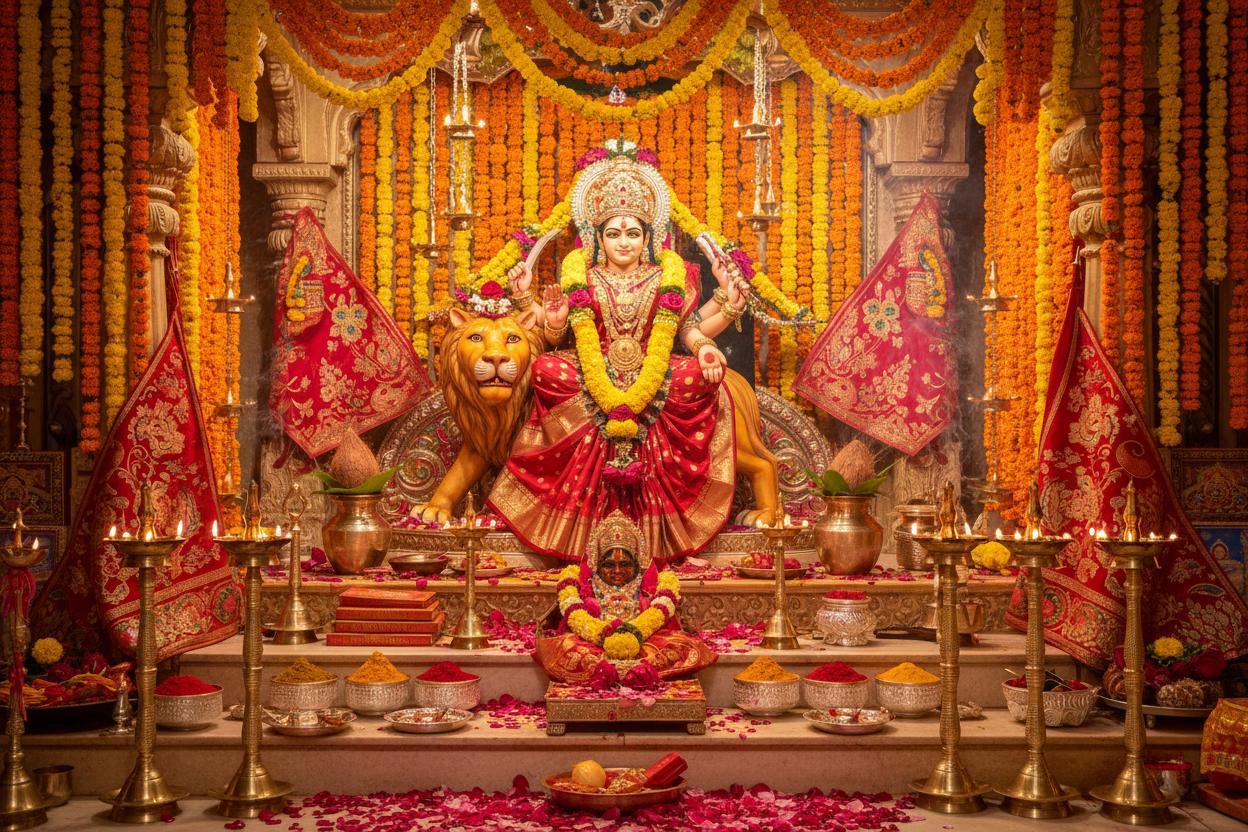
Durga Navratri is an auspicious occasion when devotees install idols, divine faces or photographs of Goddess Durga in their homes and perform special prayers for nine days. During this period, devotees decorate the goddess with flowers, turmeric, vermilion, clothes and ornaments. However, certain precautions should be followed while installing the idol and removing the decorations after the festivities. Detachable hands, feet, crowns and other decorative parts should be handled carefully without pulling them forcefully or damaging the idol. The पूजा area should be clean, and the idol must be placed securely on a stable platform. If any part of the idol breaks accidentally, devotees should handle it respectfully and seek guidance from a knowledgeable priest rather than disposing of it carelessly.
After the Navratri celebrations, flowers, leaves, clothes and other decorations should be removed respectfully and separated for appropriate disposal or reuse. Flowers and leaves can be composted where possible, while reusable ornaments and clothes can be stored safely for future festivals. Idol immersion should follow local authority instructions and environmental guidelines, preferably using designated immersion facilities. The appropriate practices may differ depending on family traditions, regional customs and the type of idol or image being worshipped. Devotees should not assume that every tradition follows the same rules. Above all, Navratri worship should be performed with devotion, cleanliness and responsibility rather than fear. If an idol is accidentally damaged or a ritual-related doubt arises, consulting a priest can help determine the appropriate course of action.







Comments (0)
No comments yet
Be the first to comment!