Politics


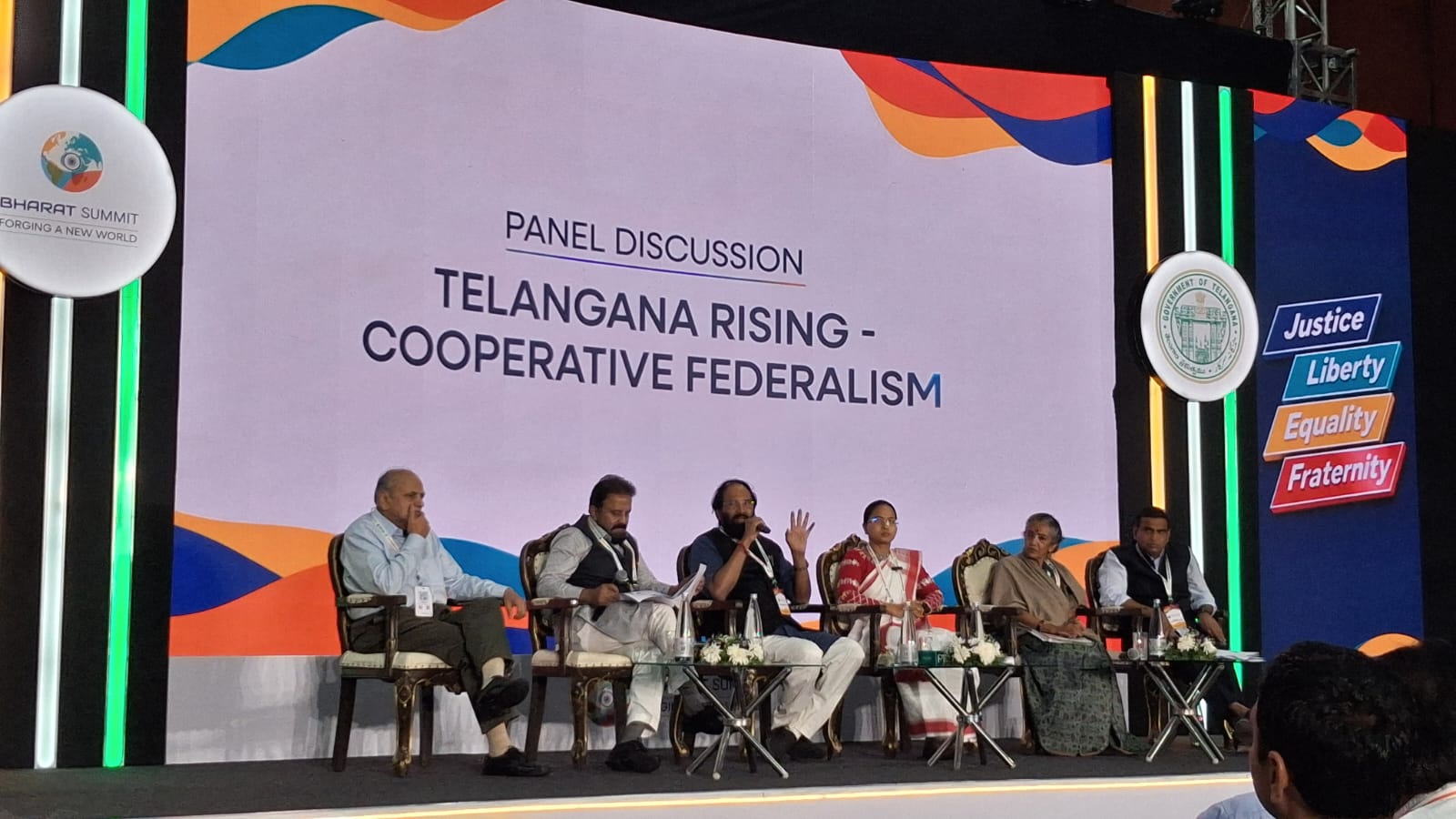
Concerns over the state of cooperative federalism in India were raised at a discussion titled “Telangana Progress – Cooperative Federal Governance” held as part of the Bharat Summit in Hyderabad on Saturday. Several political leaders and experts criticised the Centre, alleging that discrimination in fund allocation, delays in the approval of state legislation through Governors and proposed delimitation of Lok Sabha constituencies were affecting the autonomy and rights of states. Senior Congress leader and former MP Madhu Yashki Goud moderated the session. Telangana Minister for Irrigation and Civil Supplies N. Uttam Kumar Reddy criticised the Centre for announcing Minimum Support Prices (MSP) for crops such as paddy and maize without procuring the entire produce. He said the burden of purchasing crops was falling on state governments, forcing them to borrow from banks and the open market due to delays in receiving funds from the Centre. He also questioned the delay in approving bills passed by elected state assemblies. Referring to the Tamil Nadu Governor case, he expressed concern over the Supreme Court's subsequent withdrawal of its earlier ruling that had prescribed a time limit for Governors to act on bills. Uttam Kumar Reddy further warned that increasing Lok Sabha seats from 542 to 840 through delimitation could reduce the relative importance of individual MPs and weaken the voice of states in Parliament.
Jharkhand Minister Shilpi Neha Tirkey alleged that the Centre owed her state ₹1.36 lakh crore in coal royalty payments. She said amendments to the Mines and Minerals (Development and Regulation) Act had enabled the Centre to directly levy taxes on coal mines, resulting in an estimated annual loss of ₹10,000 crore to Jharkhand. She also accused authorities of undermining the powers granted to tribal village assemblies under the PESA Act, citing concerns over Niyamgiri in Odisha and the Hasdeo forests in Chhattisgarh. Social activist and writer Professor Ganesh Devy said India's federal structure, shaped by the vision of Ambedkar and Nehru, was facing serious challenges. He alleged that the Centre was restricting states' revenue sources and interfering in areas such as primary education and examinations. He described the Supreme Court as an important safeguard for federalism and called for strengthening the Rajya Sabha. Former IAS officer Aditya Mehta raised concerns over centralised control of election-related technology, referring to the possibility of a “kill switch” being held by the Centre. He also called for greater devolution of funds and responsibilities to local bodies. Bhuvanagiri MP Chamala Kiran Kumar Reddy said political differences should not lead to discrimination against states in the distribution of funds and water. Madhu Yashki Goud also highlighted the constitutional principle of equal voting rights for all citizens from the beginning of independent India.







Comments (0)
No comments yet
Be the first to comment!