
General


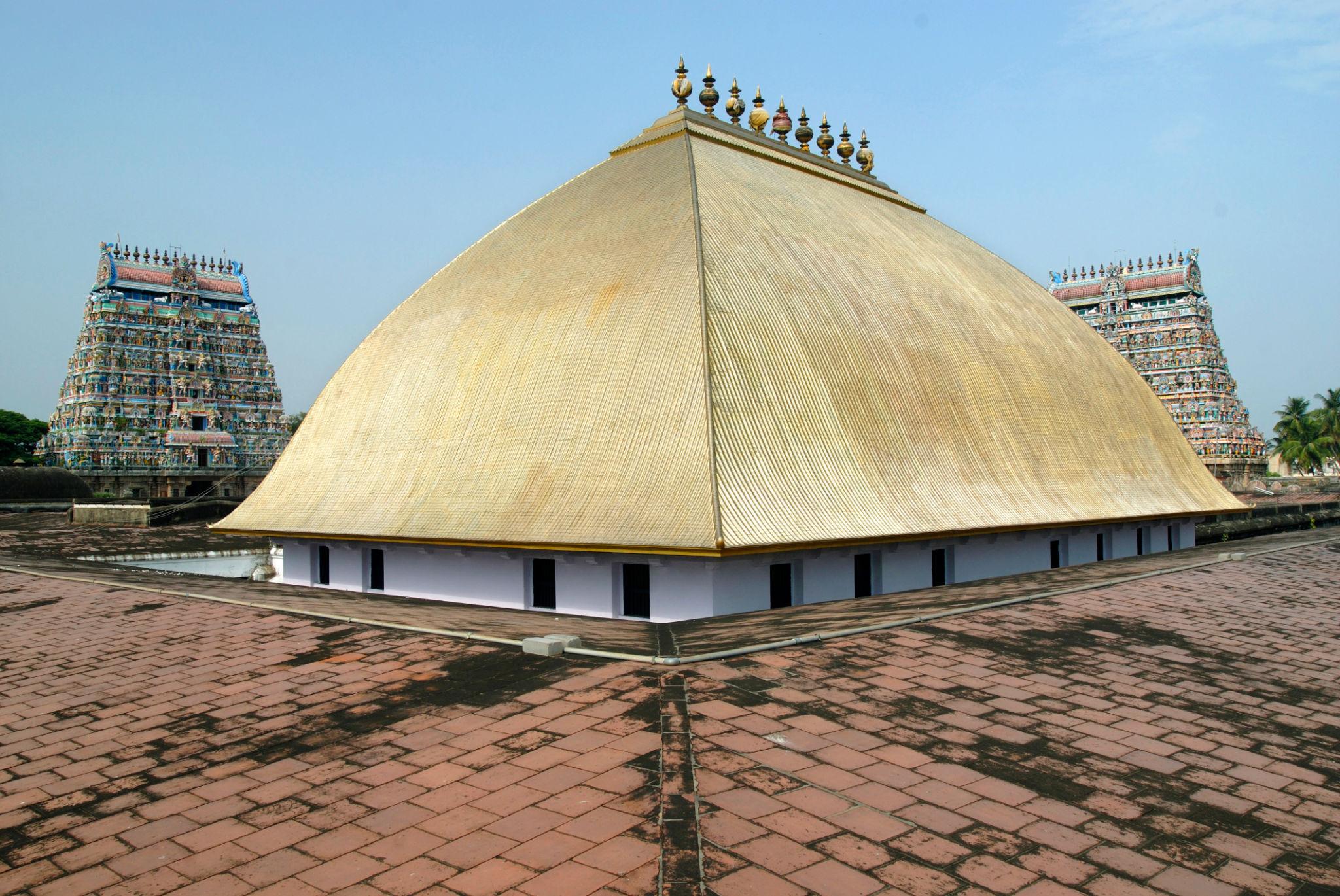
The phrase “Chidambara Rahasyam” is commonly used to describe something mysterious or difficult to understand. Its roots, however, lie in the profound spiritual tradition of the Thillai Nataraja Temple at Chidambaram in Tamil Nadu. The temple is revered as one of the Pancha Bhuta Sthalas, representing the element of Akasha, or space. According to the temple’s spiritual tradition, Lord Shiva is worshipped here not only in the form of Nataraja but also in a formless manifestation represented by space. When the curtain in the sanctum is ceremonially drawn aside during worship, devotees are shown the sacred space associated with this belief, along with a golden Bilva-leaf garland. The symbolism points to the idea that the divine is not confined to a physical form.
The deeper meaning of Chidambara Rahasyam is associated with consciousness and the removal of ignorance. The name is traditionally interpreted through “Chit,” meaning consciousness, and “Ambaram,” meaning space or sky. The curtain is therefore understood symbolically as Maya—the veil that prevents a person from recognising the truth within. When that veil is removed, the formless presence of the divine can be experienced. Temple traditions also connect Chidambaram with the legends of Patanjali and Vyaghrapada, who are said to have witnessed Shiva’s Ananda Tandava. Thus, Chidambara Rahasyam is not merely a mystery hidden behind a curtain; it conveys the spiritual message that the ultimate reality is beyond form and can be realised through inner awareness.













Comments (0)
No comments yet
Be the first to comment!