Movies


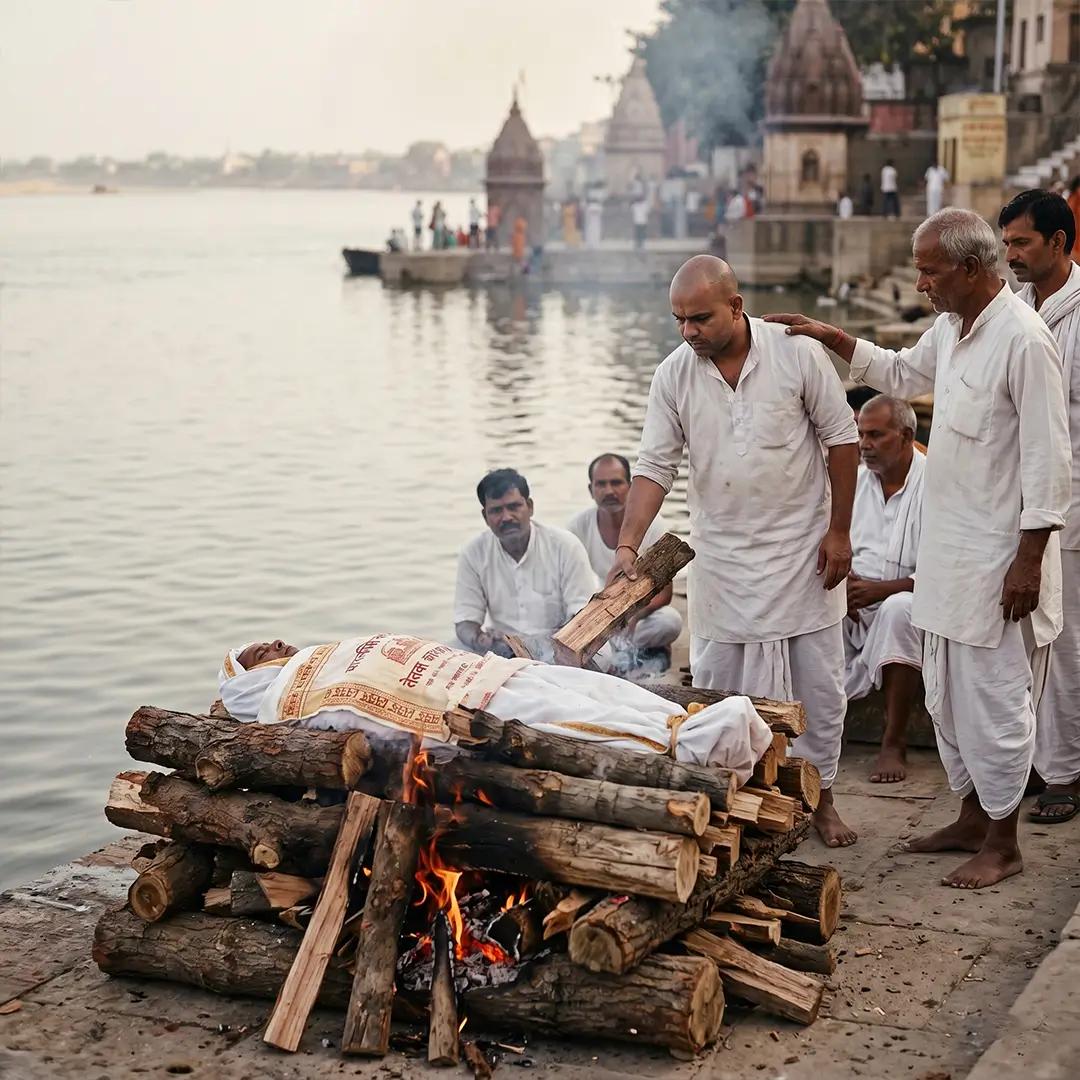
Hindu traditions attach special significance to the last rites performed after a person’s death. In many families, the responsibility of performing the final rites of a deceased parent is traditionally entrusted to the eldest son. Religious traditions consider rituals such as Antyeshti, Shraddha and Tarpana to be among the duties of children towards their parents. In particular, some traditions hold that performing the last rites allows the eldest son to fulfil his duty towards his ancestors, often described as repaying the Pitru Runa or ancestral debt. The term ‘son’ has also been given specific interpretations in certain religious traditions, where a son is traditionally viewed as someone who supports parents during difficult times and performs their prescribed post-death rituals.
However, Hindu traditions do not uniformly state that only the eldest son can perform the last rites or that the deceased can attain peace or liberation only when the eldest son performs them. Practices differ across religious schools, regions and families. Antyeshti, or the funeral rite, is regarded as an important Hindu ritual, with cremation traditionally understood as the body returning to the five elements. Fire is viewed as a sacred medium of transformation through which the physical body is offered back to nature. In some traditions, a water-filled earthen pot is broken during the funeral ceremony. This act is interpreted as a symbol of the impermanence of the physical body, the ending of worldly attachments and the soul’s onward journey. If the eldest son is unavailable, a younger son or another close family member may perform the rites, while some families today also have daughters perform the last rites of their parents. Thus, the eldest son performing the funeral rites is an ancient and widely observed tradition, but it is not a uniform mandatory practice for every Hindu family.

Comments (0)
No comments yet
Be the first to comment!