

General


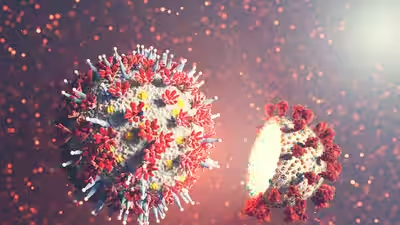
The COVID-19 virus, which caused widespread concern across the world, has once again drawn attention with the emergence of a new variant, PJ.2.1. The subvariant has been detected in several countries, prompting researchers to examine its spread and potential health impact. According to a study published in the Journal of Infection in October 2026, PJ.2.1 was first identified in Ontario, Canada, on May 2, 2026. It was subsequently detected in New York, the United States, on June 30. Researchers have also reported its presence in countries including Spain, France, Israel, Singapore, Australia and New Zealand. Laboratory studies indicate that the variant carries multiple mutations in its spike protein and may bind more efficiently to ACE2 receptors, which the virus uses to enter human cells. However, these findings are preliminary and require further investigation.
People infected with PJ.2.1 may experience symptoms such as fever, dry cough, sore throat, runny or blocked nose, headaches, muscle pain and fatigue. Some individuals may also experience breathing difficulties, loss of smell or taste and digestive problems. Since these symptoms overlap with those of other respiratory infections, medical testing is necessary for confirmation. Preliminary research suggests that the variant does not show a significant increase in its ability to evade vaccine-induced antibodies. There is also no established clinical evidence indicating an increased risk of severe illness, hospitalisation or death. Older adults, people with weakened immune systems and those with chronic health conditions should remain cautious. Experts recommend wearing masks in crowded or poorly ventilated places, washing hands regularly, maintaining good ventilation and avoiding close contact with others when experiencing symptoms.
















Comments (0)
No comments yet
Be the first to comment!