
Politics


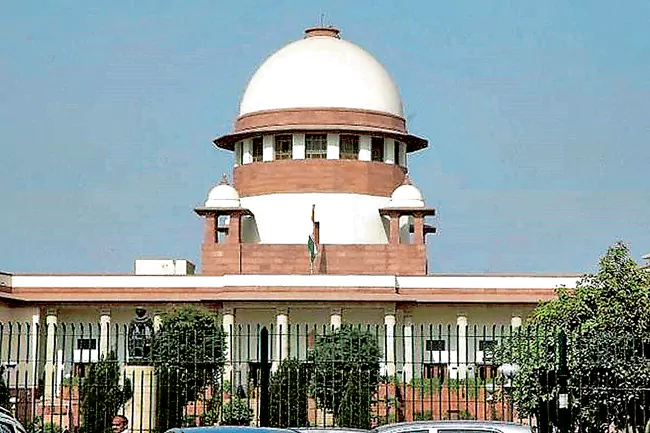
The Supreme Court has clarified that the prior approval requirement under Section 17A of the Prevention of Corruption Act does not protect public servants accused of accepting bribes. The safeguard applies to decisions and recommendations made in the discharge of official duties, not to bribery allegations, the court ruled. The case involved a Rajasthan police constable accused of accepting money to help an accused person evade criminal proceedings. The constable challenged the investigation on the grounds that approval under Section 17A had not been obtained beforehand. A bench comprising Justices S.V.N. Bhatti and N.V. Anjaria rejected the argument, clarifying the limits of the statutory protection.
In a separate matter, the Supreme Court expressed displeasure after states and Union Territories failed to submit reports on the implementation of its ruling recognising menstrual health as part of the fundamental right to life under Article 21 of the Constitution. In its January 30 ruling, the court had directed authorities to ensure adequate facilities in schools. The bench of Justices J.B. Pardiwala and R. Mahadevan questioned whether the judgment would remain confined to paper. Meanwhile, Chief Justice of India Justice Surya Kant inaugurated the Ladakh Bench of the High Court of Jammu and Kashmir and Ladakh in Leh on Sunday. The bench is designed to function as a fully IT-enabled, paperless court, with e-filing, an online recruitment portal and other digital and green initiatives launched as part of the event.












Comments (0)
No comments yet
Be the first to comment!