
Politics


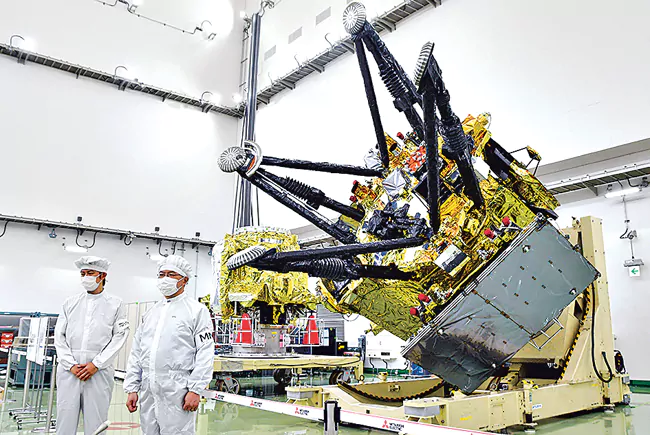
Japan is preparing its Martian Moons Exploration (MMX) mission to collect samples from Phobos, one of Mars’ two natural satellites, and bring them back to Earth. If successful, the mission would make Japan the first country to return samples from a Martian moon. Scientists remain uncertain about how Phobos and Deimos formed. Some believe the moons emerged from debris created by a massive impact on Mars, while others think they may be captured asteroids from elsewhere in the Solar System. Researchers hope that studying material collected from Phobos will help resolve this long-standing mystery and improve understanding of the evolution of the Martian system.
The approximately five-tonne MMX spacecraft consists of propulsion, exploration and return modules. After reaching the vicinity of Mars, it is designed to conduct investigations around Phobos for about three years and collect at least 10 grams of surface material. The return module is expected to bring the samples back to Earth in 2031. A rover named IDEFIX, jointly developed by France and Germany, is planned to explore Phobos in 2029 and support the mission’s scientific objectives. The findings could offer fresh insights into the origins of Phobos and Deimos, the early history of the Solar System and the emergence of life. Scientists will also assess whether Phobos could serve as a staging point for future crewed missions to Mars.













Comments (0)
No comments yet
Be the first to comment!