
Movies


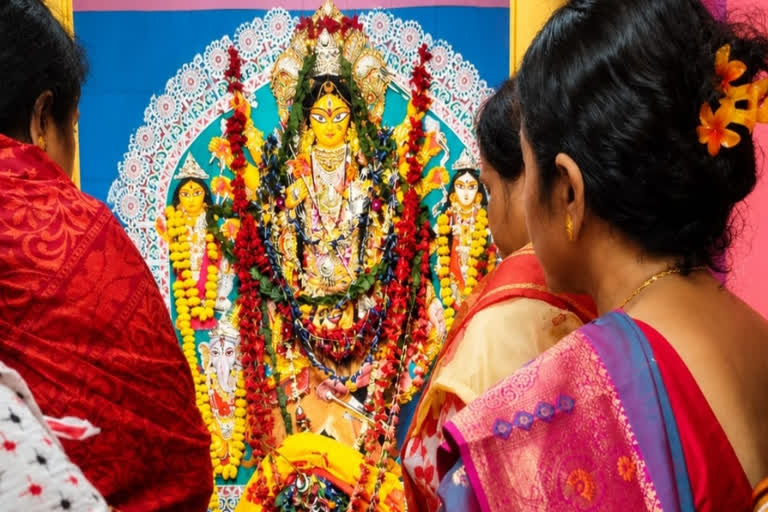
The Chakraborty family of Mia Bazaar in Midnapore, West Bengal, has been observing its distinctive Durga Puja for nearly 200 years. Unlike the usual practice of worshipping a clay idol, the family considers a painted Durga image on a traditional pat-chitra scroll as the deity’s sacred form. The five-day celebrations from Shashti to Dashami include Bodhan, the ceremonial welcoming of the goddess, and a ritual involving water collected from seven different wells. A traditional fire ritual is also conducted from Saptami to Navami. The family once followed an animal sacrifice tradition, but today a white pumpkin is offered symbolically in its place.
Another distinctive feature is the offering of fish preparations to the goddess. According to the family’s traditional belief, the fish dishes symbolise the food Durga is believed to have received at her parental home before returning to Mount Kailash. On Ashtami, the family performs a special puja with 108 blue lotus flowers. The celebrations conclude on Dashami with traditional rituals followed by immersion. Family members living in different parts of the country return to their ancestral home for the annual festival. While some practices have changed over the years, the Chakraborty family continues to preserve the key rituals passed down through generations, making its Durga Puja a distinctive example of Bengal’s rich religious traditions.








Comments (0)
No comments yet
Be the first to comment!