





Politics


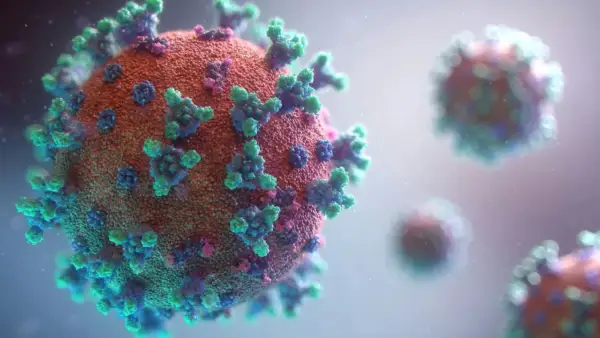
The COVID-19 virus continues to evolve, with a new variant named PJ.2.1 drawing attention from health authorities. The World Health Organization (WHO) has classified it as a Variant Under Monitoring (VUM). Belonging to the JN.1 lineage, PJ.2.1 has undergone substantial genetic changes, particularly in its spike protein, which helps the virus attach to human cells. According to reports, the variant had been detected in 18 countries as of November 8, with a growing number of cases reported in Canada and the United States. Its spread has also been reported in countries including Spain, France, Israel, Singapore, Australia and New Zealand.
Laboratory studies indicate that PJ.2.1 has a strong ability to bind to human ACE2 receptors. However, available research suggests that vaccines adapted to LP.8.1 and XFG can produce antibodies capable of neutralising the variant in laboratory tests. There is currently no conclusive evidence that PJ.2.1 causes more severe illness, and further clinical studies are needed. The WHO has assessed its additional global public health risk as low, although with low confidence. People, particularly older adults and those with weakened immune systems or chronic illnesses, should remain cautious. Anyone experiencing fever, cough or breathing difficulties should seek medical advice. Continued monitoring and genomic testing will help researchers understand the variant's spread and characteristics.














Comments (0)
No comments yet
Be the first to comment!