

Politics


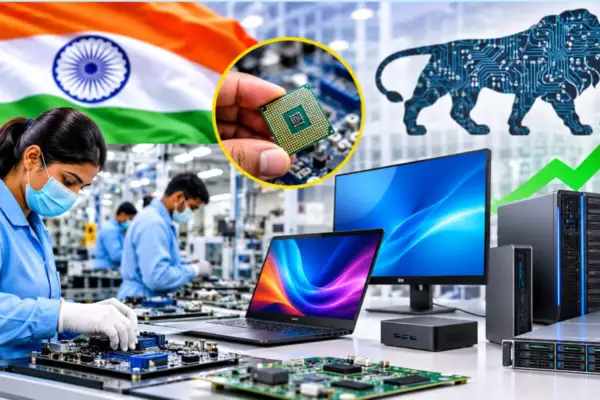
The Central Government has introduced revised rules to encourage domestic manufacturing of computers, laptops and other IT hardware products. The Ministry of Electronics and Information Technology (MeitY) has updated the method used to calculate the domestic value addition in these products. The move aims to reduce dependence on imported components, strengthen Indian manufacturers and create more opportunities for the country's electronics industry.
The revised framework covers desktops, all-in-one PCs, laptops, thin clients, servers, computer monitors and interactive flat-panel displays. Introduced under the Public Procurement (Preference to Make in India) Order, 2017, the changes give greater importance to components manufactured or assembled in India. The new calculation method considers the Bill of Materials (BoM), including locally assembled motherboards, domestically sourced printed circuit boards, and the assembly, testing and packaging of memory and storage components such as RAM and SSDs.
The government also intends to encourage companies investing in research and development within India. Domestic product designs, technological innovations and intellectual property rights developed by Indian companies will receive importance under the revised framework. A standardised format for self-certification of Domestic Value Addition (DVA) has also been introduced to improve transparency and ensure uniform assessment across manufacturers.
The new rules will come into effect six months after their publication in the official Gazette. Once implemented, they will replace the earlier provisions issued in September 2020. Through these changes, the government aims to strengthen India's electronics manufacturing ecosystem, generate employment opportunities and further advance the Make in India initiative.

















Comments (0)
No comments yet
Be the first to comment!