


Sports


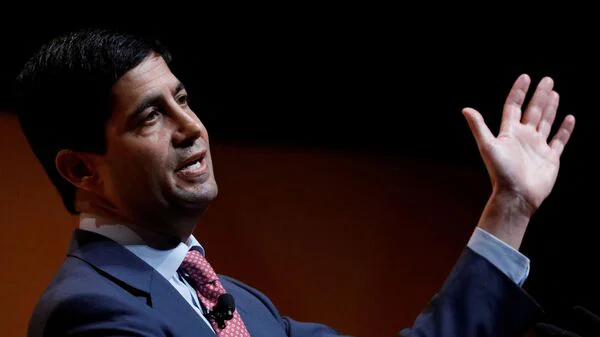
Since assuming office for a second term, U.S. President Donald Trump has been consistently urging the country’s central bank, the Federal Reserve, to cut key interest rates. However, the current Federal Reserve Chair, Jerome Powell, has not shown much inclination to act on these suggestions. Against this backdrop, Trump announced on Friday that he plans to nominate Kevin Warsh as the new Fed Governor, as Powell’s term is set to end in May this year. Notably, it was Trump himself who appointed Jerome Powell as Federal Reserve Chair in 2017.
Kevin Warsh previously served as a member of the Federal Reserve Board from 2006 to 2011. During his tenure, he was a strong advocate of higher interest rates as a tool to control inflation and openly opposed low-interest-rate policies. He also disagreed with certain Federal Reserve measures implemented during the 2008–09 global financial crisis. Warsh gained recognition as the youngest individual to be appointed as a Federal Reserve Governor, assuming the role at the age of 35. Analysts suggest that his more recent support for lower interest rates, along with his alignment with Trump’s economic policies after the President began his second term, may have contributed to his nomination. However, Warsh can assume the role of Federal Reserve Chair only after receiving approval from the U.S. Senate.
The move has sparked debate over Trump’s underlying intentions. According to the President, key interest rates in the United States should be around 1 percent, whereas the current rate of 3.5 percent is far above his preferred level. This has led to speculation that Trump’s decision is aimed at exerting greater control over the Federal Reserve, which traditionally functions as an independent institution. Beyond managing inflation and supporting employment, the Federal Reserve also serves as the country’s banking regulator. Its policy decisions have a direct impact on mortgages, auto loans, credit card interest rates and other forms of borrowing. Given the Fed’s significant influence on the U.S. economy, the potential consequences of it operating in line with presidential preferences have become a subject of close attention and debate.












Comments (0)
No comments yet
Be the first to comment!